Dental disease is one of the most common health issues cats experience effecting almost 90 percent of cats older than four, but it's also preventable with the right products for your cat.
“When choosing a toothbrush for your cat, you'll want the head of the toothbrush to be small, around the size of a child's toothbrush head or even smaller,” Stephanie Mantilla, animal trainer and zookeeper, shared with The Spruce Pets. “Cats' mouths are a lot smaller than dogs', so the brushes that fit over your finger or are sized for a human may not work for a cat. Using a toothbrush with a handle instead of a finger toothbrush will also protect your fingers should your cat bite down.”
There are a number of other factors to consider when choosing the right toothbrush for your cat. The materials used to make a finger brush or standard toothbrush vary widely. Attributes like the arrangement and firmness of the bristles can be important considerations. Check the What to Look for in Cat Toothbrushes section below for more detail.
A cat’s preferences are hard to predict, you may need to try more than one brand to find the right fit for your unique kitty. Unless you've been brushing a cat's teeth since they were a kitten, adjusting to the tooth brushing habit can be a lengthy process, requiring a lot of patience. But it's never too late to start, and the health benefits for your cat are hard to overstate.
Best Overall
Kitty Teeth Cat Toothbrush
:strip_icc():format(webp)/61gyC6aeWZL._AC_SL1217_-78bb04219e12426f863793261fa7c64e.jpg)
Designed specifically for cats
Made in the United States
Budget-friendly
Soft bristles
It’s plastic
To earn the Best Overall spot on our list, a cat toothbrush must be effective, reasonably affordable and be made from safe, quality materials. The Kittyteeth Cat Toothbrush meets and exceeds each of these criteria.
Kittyteeth uses a U.S.-based manufacturer of human toothbrushes. The plastic handle is free of bisphenol-A (BPA), a component of some plastics known to cause hormone disruption, DNA mutation, and cancer in animals. The manufacturer also rounds and polishes the end of each soft bristle to ensure a comfortable and successful brushing experience.
The tapered handle and small size of this brush allows you to reach back teeth, without being too large or clunky. The brush is less than five inches long and the head is just 0.75 inches by 0.3 inches. Unlike pet toothbrushes designed for both dogs and cats, the bristles are shorter—providing a firm yet soft experience for your cat.
Material: BPA-free plastic | Type: Brush
Best Budget
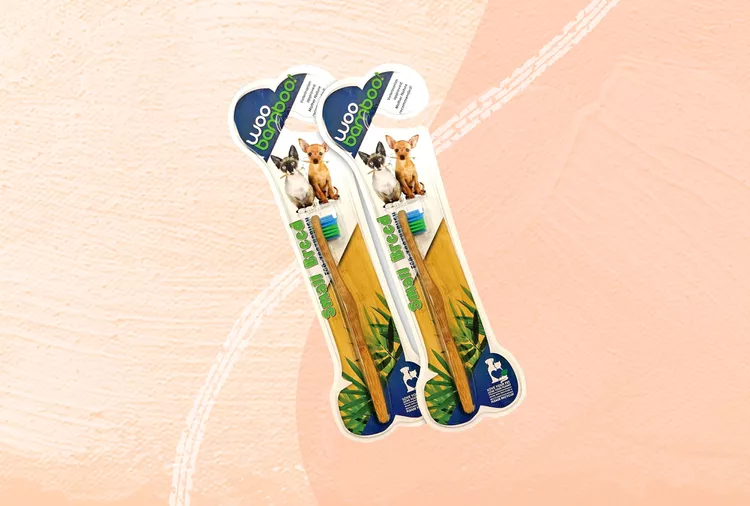
Woobamboo Dog & Cat Toothbrush
:strip_icc():format(webp)/woobamboo-dog--cat-toothbrush-72b93a0db3984085a9e7e948d63474a2.jpg)
Affordable
Less plastic than typical toothbrushes
Sustainable, organic bamboo handle and recycled packaging
Bristles are difficult to recycle
Handle can be damaged by chewers
Good dental hygiene for your cat doesn’t have to cost a lot. The Woobamboo Small Dog & Cat Toothbrush is not only cheap, it’s also one of the more eco-friendly brush options made today. The handle is made of organic bamboo, one of the world’s fastest growing land plants, and coated with a non-toxic wax finish. That means the handle is also biodegradable and can be used as a chew toy near the end of its life.
The handle is ergonomically designed for a comfortable grip. When it’s no longer effective as a toothbrush, just pull off the DuPont Tynex nylon bristles (a commonly used brand in human toothbrushes). Although marked “recyclable,” only a small percentage of recyclers are able to process these fibers. But Woobamboo makes up for the small amount of plastic in its toothbrushes, taking sustainability to the next level by packaging in post-consumer waste recycled and recyclable materials.
Each Woobamboo sale is also "plastic negative," by funding an ongoing partnership with rePurpose Global to remove plastic waste from polluted environments. Woobamboo toothbrushes are even used by the Saba Conservation Foundation to safely scrub pollution from coral reefs.
Material: Wood, nylon, synthetic fabric | Type: Brush
Best Kit with Toothpaste
Arm & Hammer Cat Dental Kit
:strip_icc():format(webp)/arm-and-hammer-dental-kit-cats-9061def6d2c940bcafcd91c641e347f9.jpeg)
Comes with toothbrush and finger toothbrush
Enzymatic toothpaste
Prevents bad breath
Suitable for cats or kittens
Toothpaste flavor gets mixed reviews from cat owners
Many cat toothbrushes are packaged and sold with a toothbrush or finger brush. The Arm & Hammer Fresh Breath Dental Kit for Cats includes both a silicone finger brush and a plastic toothbrush with an enzymatic toothpaste. The head of the sturdy plastic toothbrush is small and gentle enough to effectively brush even the hardest to reach back teeth and is even suitable to use on kittens. You can try both the toothbrush and finger brush to see which is most effective and which your kitty prefers most.
Enzymatic toothpastes contain specific naturally-occurring enzymes, a type of protein, that facilitate a natural chemical reaction. The 2.5-ounce tube of toothpaste contains a fungal extract that acts as an enzymatic cleaner producing hydrogen peroxide that, when paired with its silica-based abrasive, helps reduce plaque and tartar accumulation.
The toothpaste that comes with the Arm & Hammer Fresh Breath kit is tuna flavored with a mint scent. It's an aggressive flavor and—as with any cat toothpaste—you may find you'll need to try several options before finding one that your cat is willing to tolerate.
Main Ingredients: Sorbitol, water, hydrated silica, calcium carbonate, polysorbate 20, | Type: Brush and toothpaste
Best Finger Brush
Jasper Pet Finger Toothbrush
:strip_icc():format(webp)/Hero2_Bluenotext-b1e76e6747c74084b0e00e046cb51fd3.jpeg)
BPA- and phthalate-free
Comes with a storage case
Can be sterilized by boiling
Less effective than a handled brush
Although studies have shown that finger brushing is not quite as effective as a handled toothbrush, some pet parents prefer a finger brush because they feel softer, with no hard edges inside your pet's mouth. Some start with a finger brush until their cats become used to a regular brushing routine and then transition to a handled toothbrush. But beware, if your cat is prone to biting, on purpose or by accident, a finger brush will offer no protection from the sharpness of their teeth.
We like the Jasper Finger toothbrush because, unlike many finger brushes, this one has bristles all over its surface and it's BPA- and phthalate-free, too. The manufacturer reports that it has 12 times more bristles than other standard finger brushes. That means you don’t have to worry about perfect positioning of the brush head while you brush.
The soft silicone material means this finger brush will be gentle on delicate or diseased gums while remaining firm enough to be effective. One size fits most men and women. You can wet the finger brush to help create suction for a better fit. When done using, you can sterilize it in boiling water and store it away in the included storage case until ready to use again.
Material: Silicone | Type: Finger brush
Best Toothbrush Alternative
Jax & Cali Toothbrush Wipes
:strip_icc():format(webp)/61nE5ExVJL._AC_SL1080_-c9c31a2101484ddcbba949715171c4b9.jpg)
Easy to use
Prevents the spread of disease
Only a few natural ingredients
Disposable
Although we tend to avoid disposable products, there are certain situations where their use makes more sense. If you have several pets in need of teeth cleaning, such as in a shelter, where you must prevent the spread of disease and avoid cross contamination, the Jax & Cali Toothbrush Wipes offer a way to tackle multiple sets of teeth without juggling a large collection of brushes. These tooth wipes are also a good way to get started with brushing your cat's teeth, allowing you to build a tooth brushing habit before introducing a more abrasive brush.
Each toothbrush wipe has been pre-moistened with an antibacterial enzymatic oral treatment that's free of alcohol and parabens. Although the enzymatic blend is described as a proprietary brand, it's most likely similar to ingredients found in other commonly used enzymatic cat toothpastes. In general, enzymes are just naturally-occurring proteins, and so aren’t generally harmful. The few other ingredients in these wipes are simple, harmless and natural—peppermint, baking soda and the preservative lactic acid.
To use, you simply wrap a single wipe around your index and middle finger and rub your cat’s teeth vigorously. When finished, the wipe can be thrown away with your regular trash.
Main Ingredients: Bactase oral, purified water, natural peppermint flavor, sodium bictonte, lactic acid | Type: Finger wipe
Best Dental Treat
Greenies Feline Dental Cat Treats
:strip_icc():format(webp)/greenies-feline-dental-cat-treats-d28abc6e00d04910b06724451dcf6166.jpg)
Multiple flavors
Less than two calories per treat
Sized to fit in cat toys
Not a substitute for brushing
Although a treat is no substitute for regular teeth brushing, a dental treat can come in handy on days when you're not brushing. Dental cat treats serve at least two functions: the firm texture removes bacteria and plaque when chewing, while the vitamins and minerals help keep your cat’s teeth healthy from the inside out.
Feline Greenies Dental Cat Treats are one of only four cat treats that currently hold the Veterinary Oral Health Council Accepted seal of approval. That’s in part because each treat is nutritionally complete and has none of the artificial flavors, preservatives or fillers that are common in cat treats. When you check the ingredients list you’ll find vitamins and essential minerals as well as things cat’s love like chicken, fish, and catnip, as well as flax seed, which is rich in Omega-3 fatty acids, plus it has less than 2 calories per treat.
These dental cat treats are designed to be tough enough that your cat has to bite into them, cleaning teeth and reducing tartar buildup. This can also result in fresher breath. Feline Greenies are available in salmon, tuna, chicken, or catnip flavors, and in multiple sizes, ranging from small pouches to large tubs.
Main Ingredients: Chicken meal, ground wheat, brewers rice, corn gluten meal, poultry fat | Type: Treat
Best Dual Ended Brush
RYERCAT Dual Sided Cat Toothbrush
:strip_icc():format(webp)/61DD282IegL._AC_SL1500_-f484d25ebc6242dea2d9743786356a70.jpg)
Available in multiple colors
Addresses plaque and tartar and removes food debris
Micro sized brushes
Shaped specifically for a cat's mouth
Expensive
The RYERCAT Dual Sided Cat Toothbrush offers two sides to address different teeth cleaning issues for your cat. One end has a charcoal-infused soft nylon brush and the other end features a soft pick made of bamboo to remove food debris stuck on or in between teeth. The toothbrush is designed exclusively for cats to fit inside their small mouths with minimal discomfort, and the handle is curved to give you more control. Each brush is made of cornstarch plastic which is softer than other plastics, so it's less likely to chip a tooth if your cat bites down.
The Dual Sided Cat Toothbrush from RYERCAT comes in six colors: flamingo pink, candy cane, lavender purple, ocean blue, shamrock, and space blue. If you have multiple cats, choose a different color for each one so they have their own separate toothbrush. This brush runs more expensive than others on our list, but it has a lot of benefits that make it worth the price.
Material: Cornstarch, charcoal-infused bristles | Type: Brush
Final Verdict
We like the Kittyteeth Cat Toothbrush because it's an affordable, BPA-free toothbrush designed specifically for cats. The small, short head gets results in just a few brushings. For the days you just can’t get to it, keep some Feline Greenies Dental Cat Treats at the ready. The firm chewing and healthy ingredients won't replace regular brushing, but will help your cat’s teeth stay just a little bit cleaner.
What to Look for in Cat Toothbrushes
Size & Style
For many pet parents, the size of the brush head is what’s most important. If the brush head is too big for your cat’s mouth, your cat will resist and your brushing efforts will be ineffective. But because cats come in a wide range of sizes, there is no one brush size that works best. Think about how big your cat’s mouth is before you buy.
If you and your cat are new to this experience, consider starting with a finger brush, as long as your cat isn’t a biter. It’s easier for you to feel what’s going on with a finger brush and they tend to be softer than handled toothbrushes. But they also don’t work as thoroughly so try to work your way up to a handled brush eventually. The same approach is recommended if your kitty is struggling with a gum or mouth disease. Start with the gentlest approach and then work slowly toward a firmer, handled brush as the health of their gums improves.
Materials
When selecting a finger brush, make sure it’s made from 100% silicone and avoid plastics where possible.
Handled brushes are made from a variety of materials, plastic being the most common. Look for more sustainable bamboo handles or those made from wood or other natural materials. These materials can become a chew toy and then composted completely. Even these small choices help reduce microplastics in our oceans.
If you do choose durable, cheaper and long-lasting plastic, check the packaging or website to make sure it’s BPA- and phthalate-free. When in plastic, these chemicals leach out and end up in the body. When a toothbrush has reached its end of life, its usually the bristles, and not the handle, that are worn out.
Bristle Firmness and Arrangement
Most toothbrush bristles are made from some form of nylon plastic—even on eco-friendly toothbrushes. That’s because this plastic is inexpensive, strong, soft, and flexible. Most toothbrushes reach the end of their life because the bristles bend and weaken over time, becoming less effective. So choosing a brush with shorter bristles may increase the life of the toothbrush.
There are also a number of bristle arrangements on toothbrushes. The simplest ones have several rows of bristles emerging from a flattened surface. Some others have bristles in a full-coverage 360 degree arrangement. These are great if you can’t really see what’s happening when you brush, as long as the head is small enough to work effectively.
There are also many brands that have bristles on three different surfaces, meant to surround the teeth on the inside, outside and top of the tooth. This shape of brush sounds great in theory but often isn’t easy to use or effective in practice. That’s because to work properly, they must be positioned over the teeth just right to hit each surface, something that could be difficult to see and execute in a smaller cat’s mouth. This style also makes the head of the brush larger, so can be avoided in most scenarios.
Overall, the brush you choose may be more about what feels comfortable in your hand and about how successful you are at getting the bristles to make good contact with teeth at the gum line. Don’t be afraid to try more than one type to see what feels best for you and your cat.
-
Why does my cat need a toothbrush?
Bacteria can flourish if food is not removed often enough through regular brushing, eventually coating teeth with sticky plaque, especially at the gum line and on back teeth. Untreated plaque hardens to become tartar, which is even harder to remove. Left untreated, this naturally-occurring process can become a bacterial infection called gingivitis, one of the most common treatable feline dental diseases.
Other periodontal diseases can prove even more of a hazard, causing your pet pain and potentially requiring surgery or other costly veterinary interventions. Along with gum disease comes symptoms like bad breath, drooling, and bleeding gums. These sometimes result in difficulty eating and subsequent weight loss. Gum disease also increases your cat’s risk of heart and kidney disease as they age—with the potential for a shorter lifespan.
After a healthy diet, helping your cat develop and adjust to a regular brushing routine could be one of the most important things you can do for their health. You’ll also likely save on vet bills from treatments like dental cleanings that require anesthesia. Most veterinarians recommend that you brush your cat’s teeth daily (though the American Animal Hospital Association admits that once weekly will be a more realistic goal for most pet owners).
-
Can multiple cats share a toothbrush?
“Ideally, each cat should have their own toothbrush since cat saliva is full of bacteria,” Mantilla says. “A quick rinse of the toothbrush won't remove all the oral bacteria, so cross-contamination is likely to occur. The easiest solution is to buy toothbrushes for each cat and write their name on the handle. If you only have one toothbrush for multiple cats, you should disinfect the toothbrush by boiling it for three minutes before using it on the next cat. However, this could drastically shorten the life of the toothbrush.”
-
How do you sterilize a cat toothbrush?
“If you have a dishwasher, place the toothbrush on the top rack where the utensils go. Run the sanitize cycle without using any dishwasher soap or other chemicals,” Mantilla says. “Another option is to boil the toothbrush in a pot of water for three minutes. A UV toothbrush sanitizer works relatively well but will not remove all bacteria. That could be an option if you don't have access to a dishwasher or boiling water.”
-
Do cat dental toys actually work?
“Dental toys may help a little bit but will never be as good as you regularly brushing your cat's teeth,” Mantilla explains. “Some cats don't chew when they play with toys so the toy wouldn't be brushing their teeth. It's also unlikely that your cat would evenly chew with all of their teeth, so many teeth would miss the brushing action. If your cat already has hardened plaque, a toy won't be able to remove that from their teeth and they'd likely need a dental cleaning from the vet.”
If you’re looking for a cat dental toy as a supplement to a regular brushing routine, consider the well-rated Ronton Cat Toothbrush Toy (view at Amazon).
Why Trust The Spruce Pets?
This piece was written by Lorraine Wilde who has had at least two cat companions in her home for the past 35 years, including some special needs kitties. Two of her cats lived happily and healthily into their early 20s. She currently lives with two senior feline companions, one of which has had her teeth professionally cleaned by a veterinarian. Lorraine admits that she definitely does not clean her cat’s teeth often enough, but has been newly inspired by this article to do better for her cats (and dogs too).
When researching these brands, Lorraine evaluated the type and quality of the ingredients, the company’s research and development, and their business ethics. She also holds a Bachelor’s degree in Biology and a Master’s degree in environmental science. Lorraine is a firm believer that consumers can make healthy, informed and environmentally-conscious choices to protect their pets and our planet.
Stephanie Mantilla is an experienced positive reinforcement-based animal trainer with a focus on cat behavior. Her 12 years as a zookeeper have given her experience and training with a range of animals from lions, cheetahs and tigers to bears, elephants, shrews and monkeys. Mantilla is also the author of the new book, How To Clicker Train Your Cat, where she walks cat parents through the steps for training their cats the fun way.