15 Top Cat Breeds With Big Eyes

4.3K
171
71
2025-11-11
15 Top Cat Breeds With Big Eyes

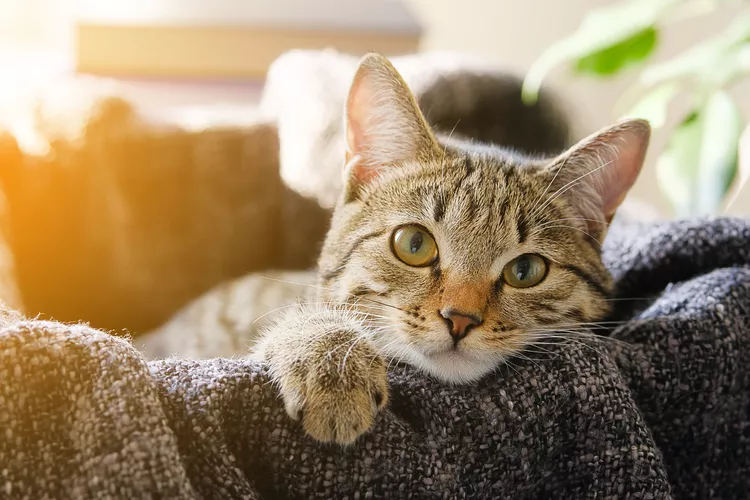
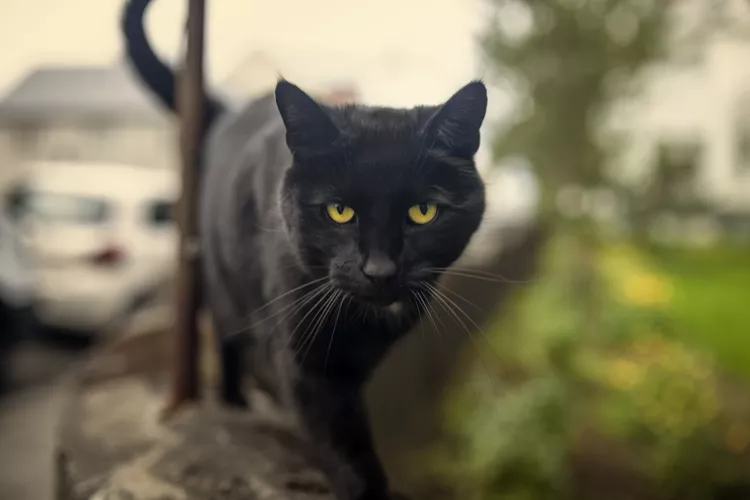
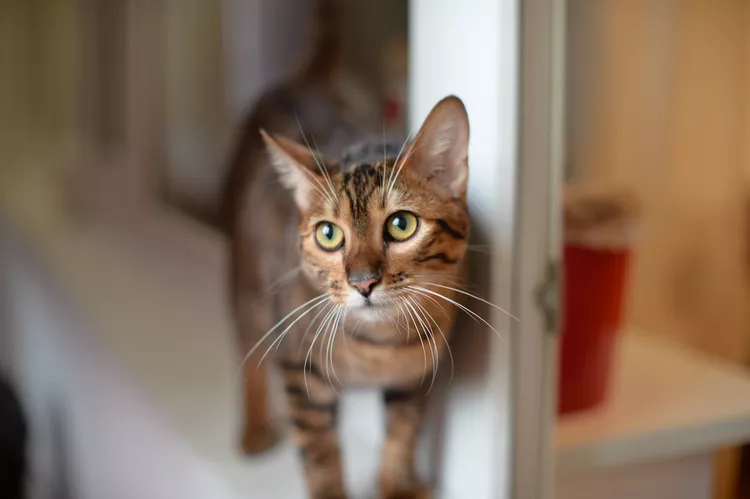
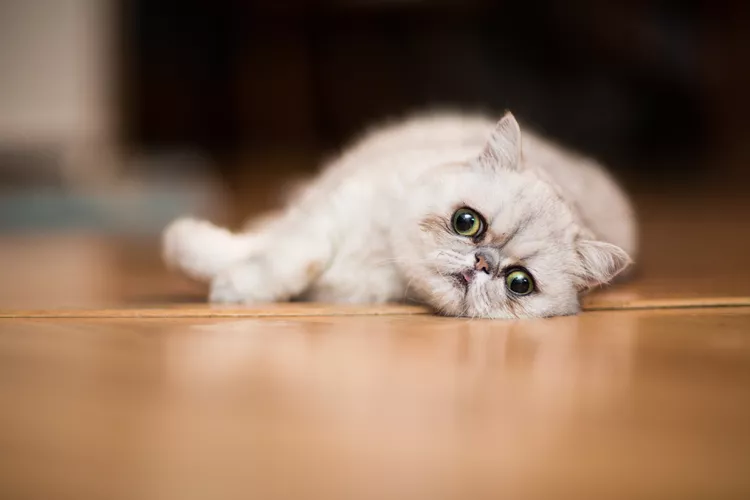
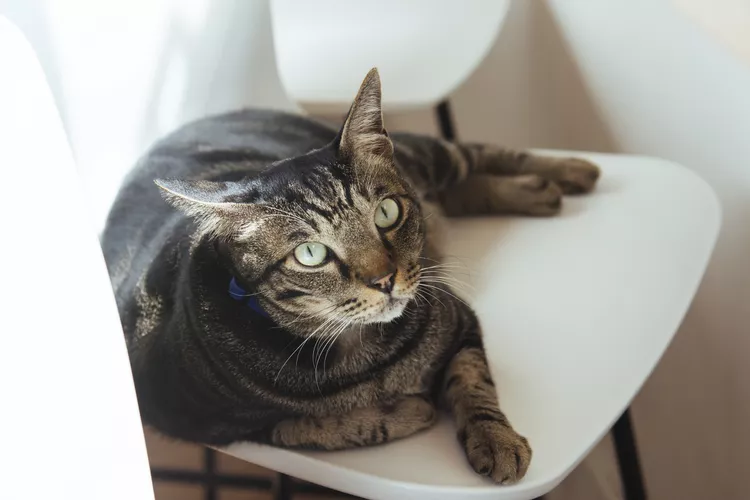
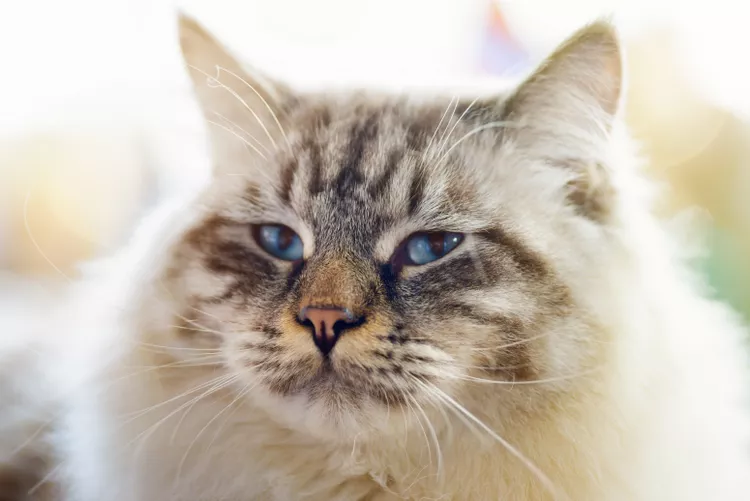
A unique cat feature that stands out, like hair color or hair type, is eye size. Cats with big eyes are seriously cute, and some have an anime-cartoonish quality to them. Breeds with big eyes include familiar breeds, like the pretty Persian or the more exotic Tonkinese or Singapura. Eyes are one way that your cat communicates. Pupil size, blinking, staring—each is a potential sign about your cat's thoughts and imminent actions. In this case, when it comes to eye size, the bigger the window, the easier it is to understand your cat.

Whether your cat is feeling fear, aggression, pleasure, or excitement, the eyes show it. Learn the signs (including the rest of its body signals), and you unlock an unspoken language with your cat.

Tip

Heterochromia or odd eyes is when a cat is born with eyes of different colors (for example, one is blue, and one is green). It's an infrequent occurrence but happens on occasion. If your cat is born that way, don't worry about it. But if one eye begins to change color over time, it's a warning sign. Another red flag is if your cat immediately develops two different pupil sizes, that's an urgent situation, and your cat needs veterinary attention immediately.

Breed Characteristics

Medically speaking, big-eyed cat breeds do not have a higher tendency to have eye conditions as a group. However, of the top big-eyed breeds, Persians and Burmese are more prone to cataracts, a condition when the eye lens becomes white and cloudy. All cats, no matter the breed, can develop cataracts in their old age.

These are the top 15 cat breeds with large eyes.

  • 01 of 15

    Cornish Rex

    Often popping up on the list of curly-coated cats or best hypoallergenic cats, the Cornish rex is no stranger to being at the top of specialty cat breeds. But this time, it’s for this breed's captivating gaze. The Cornish rex has a triangle-shaped head that lends to its oval-shaped eyes' prominent position and size. The eyes are often gold in color, though green, blue, brown, and hazel eyes are also possible.

    Breed Overview

    Height: 11 to 15 inches

    Weight: 6 to 10 pounds

    Physical Characteristics: Tight, curly short hair with a triangular head and over-sized, wide-set ears

  • 02 of 15

    Devon Rex

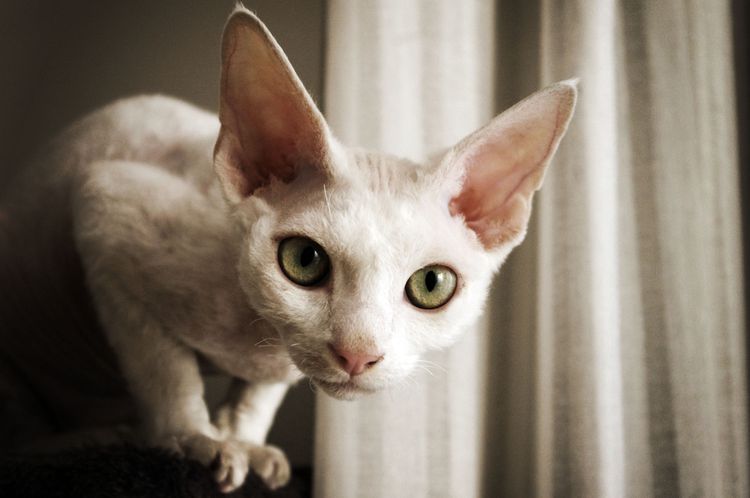
    Similar to the Cornish rex, the Devon rex usually gains fame for its curly coat. However, this breed also has large oval-shaped eyes that give it an out-of-this-world look. The svelte body paired with the large eyes and wide, triangular ears mean these cats command attention when they saunter into a room. All shades of eye color are possible in a Devon rex, though cats with a mink-colored coat will often have aqua eyes, and cats with a colorpoint coat often sport beautiful blue eyes.

    Breed Overview

    Height: 10 to 12 inches

    Weight: 6 to 9 pounds

    Physical Characteristics: Fine to medium bone structure with broad chest and triangular head; soft, thin, curly coat

  • 03 of 15

    Singapura

    One of the tiniest felines also happens to be a cat breed with the most enormous eyes. The Singapura, which originated in the streets of Singapore, is The International Cat Association's (TICA) smallest registered cat breed. It is best known for its large, expressive eyes and affectionate, playful nature. The Singapura’s almond-shaped eyes are hazel, green, or yellow. The large, wide-open eyes are an integral characteristic of the breed. The breed standard states explicitly that small eyes are a severe fault for this breed.

    Breed Overview

    Height: 6 to 8 inches

    Weight: 4 to 8 pounds

    Physical Characteristics: Petite but muscular stature; rounded head and large eyes

  • 04 of 15

    Sphynx

    Usually known for its hairless skin, the sphynx is also known for its arresting gaze and nearly human-like expressions (and personality). Maybe it’s the lack of facial fur, but there’s no denying that the sphynx will draw you in with its large and uniquely shaped eyes. The breed standard describes its eyes as “lemon-shaped,” with the eyes of this cat breed having a wide-open center that comes to a point at either side of the eye. While a variety of eye colors are possible for this cat breed, icy blue, aqua, and green shades especially highlight the big gaze of the sphynx. 

    Breed Overview

    Height: 8 to 10 inches

    Weight: 10 to 12 pounds

    Physical Characteristics: Hairless body, with skin pigmentation providing various color types; long limbs and arched back; triangular head with lemon-shaped eyes

    Continue to 5 of 15 below
  • 05 of 15

    Persian

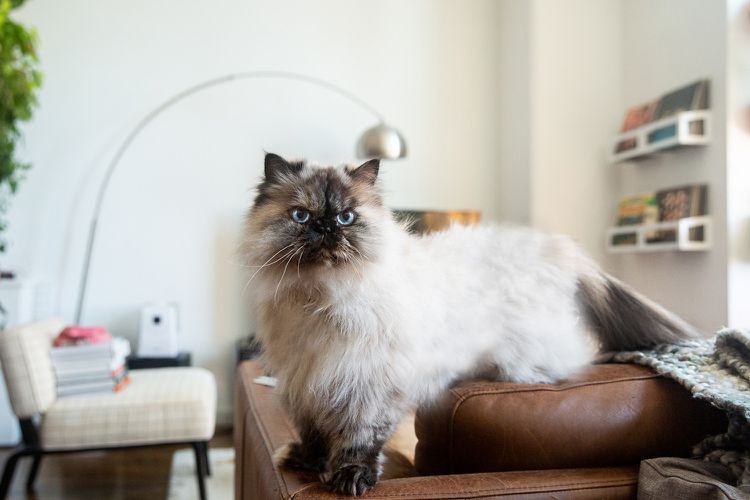
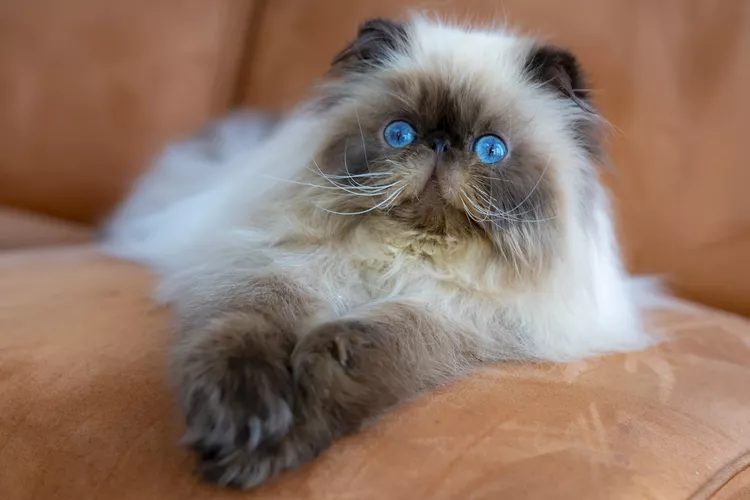
    Perhaps owing to the Persian’s small, flat face, the round, full eyes are prominent in this exotic-looking cat breed. Persians are also known for sporting bright blue, green, or copper peepers that strike a beautiful contrast with their long, fluffy coats. However, odd-eyes or heterochromia (one blue, one copper) is also possible.

    Breed Overview

    Height: 8 to 10 inches

    Weight: 7 to 12 pounds

    Physical Characteristics: Medium-sized body with long coat; full, flat face with round eyes

  • 06 of 15

    Scottish Fold

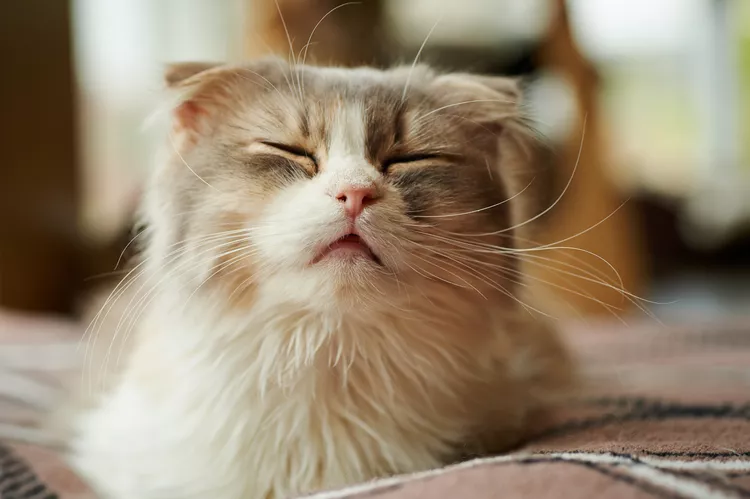
    The most distinctive feature of the Scottish fold might be its ears, which appear to fold over and lay flat against the head. But not to be overlooked is the fact that the Scottish fold has rounded, large eyes that, together with its ears, give these cats a quintessentially cute look. Scottish fold eye colors include copper, gold, blue, and green. They are notably well-rounded in shape. The broad nose in the center of the face separates the eyes.

    Breed Overview

    Height: 8 to 10 inches

    Weight: 9 to 13 pounds (males); 6 to 9 pounds (females)

    Physical Characteristics: Round face and body with an overall compact appearance; folded ears and large, rounded eyes

  • 07 of 15

    Burmese

    The Burmese cat as we know it today results from a cross of the native copper cat of Burma (Myanmar) with the Siamese. All Burmese cats trace their heritage to a female Burma kitty named Wong Mau. Another feature that all Burmese cats share is large round eyes in glowing green or gleaming gold.

    Breed Overview

    Height: 10 to 12 inches

    Weight: 6 to 14 pounds

    Physical Characteristics: Short coat with long legs and expressive, rounded eyes; coat is primarily sable, champagne, platinum, and blue

  • 08 of 15

    Tonkinese

    Gaze into the eyes of a Tonkinese kitty, and you may not be able to look away. In addition to having large, rounded eyes, these cats have exotic eye colors like aqua, sky blue, violet, and gold. The breed developed as a cross between the Burmese and the Siamese, which have striking coat colors and varied genes. Together, this heritage gives the Tonkinese big, colorful, unique-looking eyes.

    Breed Overview

    Height: 8 to 10 inches

    Weight: 6 to 12 pounds

    Physical Characteristics: Medium-sized body with short fur; open, almond-shaped eyes in bright hues like aqua, gold, and blue

    Continue to 9 of 15 below
  • 09 of 15

    Russian Blue

    The beautiful Russian blue is another top cat breed with big eyes. These cats have triangular heads with round, wide-set eyes that always seem to be watching you—except for when a cat nap is in progress. What’s most interesting about this cat breed’s eyes is the fact that all kittens are born with yellow eyes. As the kitten matures, the eyes will slowly transition to green, the expected eye color of this big-eyed cat.

    Breed Overview

    Height: 9 to 10 inches

    Weight: 8 to 15 pounds

    Physical Characteristics: Fine-boned with long limbs; triangular head with distinctive green eyes and broad nose; plush double coat in blue-gray 

  • 10 of 15

    British Shorthair

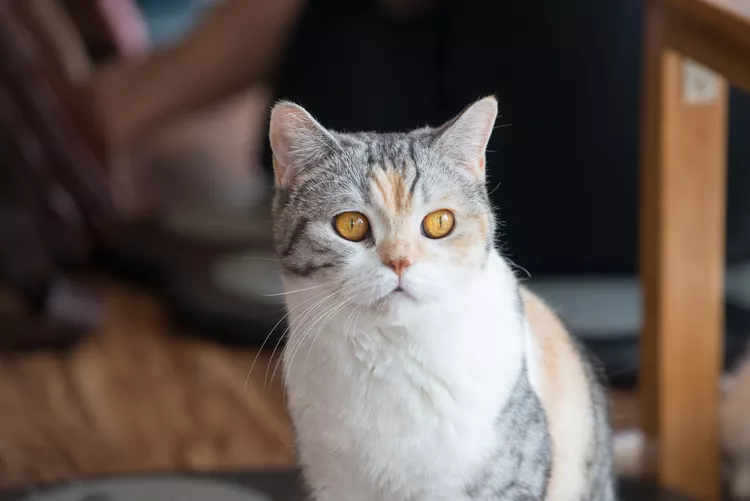
    Nearly all features of the British shorthair are round, and the eyes of this cat breed are no exception. These cats have large, round, and well-opened eyes. Pictures of the breed often feature a blue coat paired with gorgeous gold eyes, but many coat colors and eye colors are possible, including green, blue, and copper.

    Breed Overview

    Height: 12 to 14 inches

    Weight: 7 to 17 pounds

    Physical Characteristics: Round face and body with males having heavy jowls; short but dense coat in both solid shades including white, blue, and black along with tabby, calico, shaded, or bi-color variations

  • 11 of 15

    Abyssinian

    The Abyssinian is an exotic-looking cat for many reasons, not the least of which is its large and expressive eyes. Interestingly, these cats have somewhat almond-shaped eyes that are fairly unique in the feline world. This cat's peepers have a distinctive angled corner and aren’t the typical round shape of many large-eyed cat breeds. A unique feature of Abyssinian cat eyes is a thin dark line that encircles the eye, providing high contrast to the often light green or golden eye color. 

    Breed Overview

    Height: 8 to 10 inches

    Weight: 8 to 12 pounds

    Physical Characteristics: Silky coat in short to medium length; slightly arched back with long limbs; triangular ears and almond-shaped eyes

  • 12 of 15

    Chartreux

    The Chartreux is a cat breed with round eyes that seem to be always alert and ever-expressive. A national treasure in France, the Chartreux cat has a uniform blue-gray coat, and its eyes are also somewhat standard in color, ranging from copper to gold. The most desirable eye color is a deep orange hue that nicely complements the Chartreux’s blue coat.

    Breed Overview

    Height: 9 to 11 inches

    Weight: 12 to 16 pounds

    Physical Characteristics: Round head and thick body; solid blue-gray coat with a somewhat wooly texture that varies in shade from light ash to slate gray

    Continue to 13 of 15 below
  • 13 of 15

    Ocicat

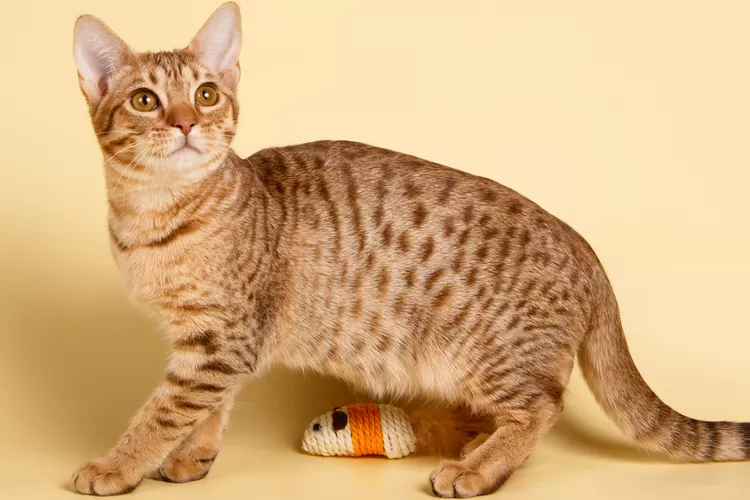
    Unique in its leopard-like appearance, the ocicat has large, almond-shaped eyes. They angle upwards in the corner and are somewhat wide-set. There should be more than the width of an eye in between each eye, according to the breed guidelines. Ocicats have diverse genes, and the eye color can vary significantly with all eye colors acceptable for the breed—except for blue.

    Breed Overview

    Height: 9 to 11 inches

    Weight: 6 to 15 pounds

    Physical Characteristics: Athletic with long tail; short-haired tabby coat with various shades of spotting including blue, brown, lavender, fawn, and silver

  • 14 of 15

    Ragamuffin

    The ragamuffin is a long-haired breed with huge, expressive eyes that can be found in all shades. They are sometimes confused with the ragdoll breed. The ragamuffin has walnut-shaped eyes and a distinct scoop to the nose profile. The ragdoll has almond-shaped eyes, and the nose is sloped, not scooped.

    Breed Overview

    Height: 10 to 15 inches

    Weight: 8 to 20 pounds

    Physical Characteristics: Long and silky coat; in white, black, blue, red, lavender, cinnamon, chestnut, platinum, and chocolate; with amber, blue, green, gold, or odd-eyed eye colors

  • 15 of 15

    Japanese Bobtail

    The Japanese bobtail is perhaps best known for sporting a short bobbed tail, but their eyes are also large and round and come in an attractive range of colors. Heterochromia or having odd-eye colors is not uncommon with this breed. The breed standard accepts heterochromia.

    Breed Overview

    Height: 8 to 9 inches

    Weight: 5 to 10 pounds

    Physical Characteristics: Short or long coat; in solid white, black, chocolate, cream, red, lilac, and blue; bi-colored and tricolored coats are common; eye color can be any shade, though blue, gold, and odd-eyed are common

Breeds to Avoid

Macrophthalmia refers to a congenital condition where either the eye or eyes are abnormally large. This condition is extremely rare but can occur during fetal development in any breed. These conditions usually indicate the lens is detached (luxation), the presence of cataracts and glaucoma, and that the cat is generally blind.

Macrophthalmia is likely passed down as a genetic error. Blind cats make up for their vision loss with hearing and smell senses and can live happy and healthy lives. However, it's considered inhumane to breed from cats that have macrophthalmia. Cats may not show discomfort, but if the eye pressure is causing the eye to bulge, it can cause discomfort or pain, and a veterinary specialist should remove the eyeball to alleviate the pain.
Article "tagged" as:

Top Articles

Related Article

How Cats Show They Love You
31.2K
311
52

How Cats Show They Love You

Cats show their love in many ways and it usually involves body language and other behaviors. Find out if your cat is trying to tell you they love you.
Why Your Cat Is Meowing So Much—and Other Ways They Seek Your Attention
35K
2.1K
945

Why Your Cat Is Meowing So Much—and Other Ways They Seek Your Attention

Attention-seeking behavior in cats and excessive vocalization often go hand-in-hand. Learn about the types and causes of these behaviors.
Why Do Cats Groom and Lick Themselves So Often?
48.1K
4.3K
2K

Why Do Cats Groom and Lick Themselves So Often?

Cats may spend as much as half their time grooming and licking themselves. What leads to this behavior, and how does it help your cat?
Why Does My Cat Scratch the Floor After Eating?
30.7K
1.5K
767

Why Does My Cat Scratch the Floor After Eating?

Many cats paw at the floor or bury their food. It's a natural behavior, but it's easy to modify.
How to Stop a Cat from Spraying
2K
39
15

How to Stop a Cat from Spraying

Urine spraying, or marking, is different than urinating outside of the litter box. Learn about why cats will urine spray and what to do about it.
Do Cats Cry When They Are Sad or in Pain?
3.8K
150
70

Do Cats Cry When They Are Sad or in Pain?

Cats don't cry the way people do. Your cat can produce tears, but not ones of sadness. Explore the truth behind a cat's emotions and what those tears mean.
How to Train Your Cat to Not Be Mean
31.6K
315
122

How to Train Your Cat to Not Be Mean

Learn about mean cats and angry cat behavior. Understand why cats sometimes hate hugs and learn steps to make cats happy (or happier).
How to Crate Train Your Cat
44.7K
3.6K
1.6K

How to Crate Train Your Cat

Crate training is not just for dogs. Follow these steps to train your cat to the crate so you can have less stressful car rides and vet visits.
Why Cats Stare at You While You Sleep and How to Stop It
9.3K
650
299

Why Cats Stare at You While You Sleep and How to Stop It

Cats are known to stare at humans while they sleep. Find out why and how to stop it.
How to Stop Your Cat From Tracking Litter and Poop
13.4K
400
144

How to Stop Your Cat From Tracking Litter and Poop

While they're generally clean animals, sometimes cats get poop on their paws, and track litter outside the box. Learn how to stop this behavior.
Is My Cat Happy?
8.2K
81
28

Is My Cat Happy?

Cats tell us that they are happy by vocalizing their pleasure, showing their moods by their body language, and plainly acting happy.
How to Stop Your Cat From Pooping in the Sink or Bathtub
40.8K
815
342

How to Stop Your Cat From Pooping in the Sink or Bathtub

It's frustrating and unpleasant when your cat defecates in the sink or tub, but you can stop the unwanted behavior with some of these techniques.
22 Weird Cat Behaviors You're Not Sure About
13.2K
132
51

22 Weird Cat Behaviors You're Not Sure About

Explore 22 weird cat behaviors and why they do them. Many are methods of cat communication, from winking to bunting, rolling, sneering, and kneading.
Understanding the Purring of Cats
8K
643
315

Understanding the Purring of Cats

Get a better understanding of variations on cat purring. Cats purr to communicate and even have special purrs.
What Is Scruffing in Cats?
7.1K
567
90

What Is Scruffing in Cats?

Learn more about the origins of cat scruffing and why you should not be scruffing your cat.
Understanding How Cats Speak Through Ear Movements
10.4K
415
170

Understanding How Cats Speak Through Ear Movements

Cat owners can learn "cat talk" and get a deeper understanding of how cats use their cat ears to communicate different emotions.
Safe Solutions for Indoor Cats That Want to Go Outside
49.5K
2K
673

Safe Solutions for Indoor Cats That Want to Go Outside

Cat lovers who want their cats to enjoy fresh air and sunshine often feel guilt by confining their cats to the indoors. Here are safe compromises.
How to Discipline Your Cat the Right Way
32.2K
643
308

How to Discipline Your Cat the Right Way

Cats are mischievous but sometimes they also misbehave. Learn how to safely and effectively discipline a cat and positively change their behavior.
How to Stop Cats From Biting and Scratching
48.2K
481
177

How to Stop Cats From Biting and Scratching

Cats learn to bite and scratch as kittens and may need to be retrained when they grow older. These behaviors can be changed with time and patience.
Reasons Why a Cat Doesn't Meow
49.1K
2.9K
1K

Reasons Why a Cat Doesn't Meow

When a cat doesn't meow, it is often just natural behavior, but when its silence is accompanied by other symptoms, have a vet examine your pet.
Top 10 Big House Cats
20.3K
405
145

Top 10 Big House Cats

Larger cat breeds, like Maine coons and savannahs, deserve just as much love as their petite counterparts. These big house cats tip the scales.
Toyger: Cat Breed Profile, Characteristics & Care
25K
2.5K
949

Toyger: Cat Breed Profile, Characteristics & Care

The toyger (toy tiger) cat is a beautiful, rare breed with an easygoing demeanor. These cats are hard to come by but make excellent pets.
Elf Cat: Breed Profile, Characteristics & Care
31.2K
1.9K
748

Elf Cat: Breed Profile, Characteristics & Care

Elf cats are a new, rare cross between a sphynx and American curl with curly ears and a playful personality.
American Wirehair: Breed Profile, Characteristics & Care
46.3K
462
73

American Wirehair: Breed Profile, Characteristics & Care

The rare American wirehair breed has a distinctive wiry coat and quiet, gentle demeanor. Learn about the American wirehair breed.
Turkish Angora: Cat Breed Profile, Characteristics & Care
49K
4.9K
882

Turkish Angora: Cat Breed Profile, Characteristics & Care

The elegant and silky Turkish Angora cat is a playful, affectionate, and sometimes mischievous pet. Learn about the Turkish Angora breed.
Himalayan: Cat Breed Profile, Characteristics & Care
35.7K
3.2K
770

Himalayan: Cat Breed Profile, Characteristics & Care

Himalayan cats—crosses of Persian and Siamese breeds—are sweet felines with silky hair. They're great pets if you're willing to care for their coat.
Ocicat: Breed Profile, Characteristics & Care
11.6K
232
51

Ocicat: Breed Profile, Characteristics & Care

The ocicat has wild markings, but it is a completely domestic cat that loves to socialize and play. Learn about the ocicat breed.
10 Popular Cat Breeds for Many Types of Households
35.3K
1.1K
201

10 Popular Cat Breeds for Many Types of Households

Discover 10 of the most popular cat breeds, including the Maine coon and ragdoll. Learn which types of cats are right for your lifestyle.
9 Calmest Cat Breeds for Laid-Back People
25.9K
1K
476

9 Calmest Cat Breeds for Laid-Back People

Calm cat breeds like the Persian and ragdoll are ideal for people who like a mellow pet. Meet nine of the calmest cat breeds.
Persian Cat: Breed Profile, Characteristics & Care
21.6K
649
123

Persian Cat: Breed Profile, Characteristics & Care

The Persian cat is sweet, laid-back, and regal, with a luxurious long coat. Learn more about this long-cherished cat breed.
Mixed-Breed Cat (Moggy): Breed Profile, Characteristics & Care
2.5K
247
32

Mixed-Breed Cat (Moggy): Breed Profile, Characteristics & Care

"Mixed-breed" is a catch-all term for cats without pedigrees. Called moggies in the UK, these cats make perfect pets. Learn about the mixed-breed cat.
7 Hybrid Cats Breeds
9.7K
876
210

7 Hybrid Cats Breeds

Hybrid cat breeds can make appealing pets since they look more exotic than domestic house cats, but they aren't for everyone.
Japanese Bobtail: Cat Breed Profile, Characteristics & Care
5.8K
289
40

Japanese Bobtail: Cat Breed Profile, Characteristics & Care

The Japanese bobtail is recognized for its bunny-like tail and is loved for its friendly, playful personality. Learn about the Japanese bobtail breed.
10 Cat Breeds That Are Rare to Find
3K
59
25

10 Cat Breeds That Are Rare to Find

Most house cats in the U.S. are not pedigreed or purebred, so even the most common breeds are rare. Take a look at the rarest of the purebreds.
Ragamuffin: Cat Breed Profile
4.4K
444
115

Ragamuffin: Cat Breed Profile

Learn about the personality, history, and care for Ragamuffin cats.
How to Know When to Call the Vet for Your Cat
19.5K
194
69

How to Know When to Call the Vet for Your Cat

How to know when to call your veterinarian for your cat.
How to Tell if a Cat Is Pregnant
41.7K
833
133

How to Tell if a Cat Is Pregnant

Could your cat be pregnant? Learn about the signs of pregnancy in cats. If you spot these telltale signs, it may be time to schedule a vet appointment. Here's how to tell if your cat is pregnant.
Are Tulips Toxic to Cats?
15K
150
48

Are Tulips Toxic to Cats?

Tulips are one of many flowers that are toxic to cats. Learn the dangers, what to do in the case of ingestion, and how to keep your cat safe from tulip toxicity.
Constipation in Cats
13.9K
139
23

Constipation in Cats

Constipation in cats is a common, but uncomfortable, digestive disturbance. Find out what causes cat constipation and its treatment and prevention.
Feline Immunodeficiency Virus (FIV) in Cats
13.7K
1.4K
506

Feline Immunodeficiency Virus (FIV) in Cats

FIV is a common and potentially deadly feline disease. With good veterinary care, though, cats with FIV can survive many years after diagnosis.
How to Help a Pregnant Cat Give Birth
48K
1.4K
389

How to Help a Pregnant Cat Give Birth

Your pregnant cat may be able to give birth with no problems. However, if trouble arises, knowing in advance what to look for will help the process.
Can Indoor Cats Get Fleas?
40K
3.6K
1.4K

Can Indoor Cats Get Fleas?

It may be surprising to learn that indoor cats can and do get fleas too. Learn what to look for and how to treat these itchy pests.
Kitten Constipation: What to Do When You Kitten Can't Poop
12.3K
615
239

Kitten Constipation: What to Do When You Kitten Can't Poop

Kittens usually experience more diarrhea than constipation, but a kitten that has trouble passing stool, or is not defecating can be just as serious.
How to Take Your Cat's Temperature
32K
3.2K
607

How to Take Your Cat's Temperature

Your cat's temperature should be between 100.4 and 102.5 degrees Fahrenheit. Learn how to take its temperature and determine if it has a fever.
Why Is My Cat Throwing Up Its Food?
1.3K
51
16

Why Is My Cat Throwing Up Its Food?

Cats throw up food for many reasons, and it may be a sign of a serious illness. Find out why your cat is vomiting undigested food and what to do about it, including when to call the vet.
Asthma in Cats
26.8K
1.3K
201

Asthma in Cats

Cats with asthma may wheeze or cough, and they require medical intervention to manage the condition. Learn the causes, treatment, and prevention.
8 Ways to Help a Blind Cat Keep Safe in Your Home
37K
1.5K
710

8 Ways to Help a Blind Cat Keep Safe in Your Home

Blind cats are much like any other cats, except you might want to do some things around the house to help them get around safely.
Are Mums Toxic to Cats?
16.7K
1.3K
414

Are Mums Toxic to Cats?

Mums can be dangerous to cats if they eat them or if they come into contact with the skin. Here's what you need to know about chrysanthemum toxicity in cats, including when to contact the vet.
Glaucoma in Cats
10K
99
28

Glaucoma in Cats

Glaucoma is a disease that creates painful eye pressure in cats. Learn the causes, treatment, and prevention.
Signs of Heat in Cats
34.1K
2K
409

Signs of Heat in Cats

A cat in heat will show several physical and behavioral signs. Here's how to tell if your cat is in heat and how to care for her during this time. Learn the signs and how to prevent pregnancy, even if her cycle has begun.